A Brass Plate and a Postcode: The Limits of the Virtual Address

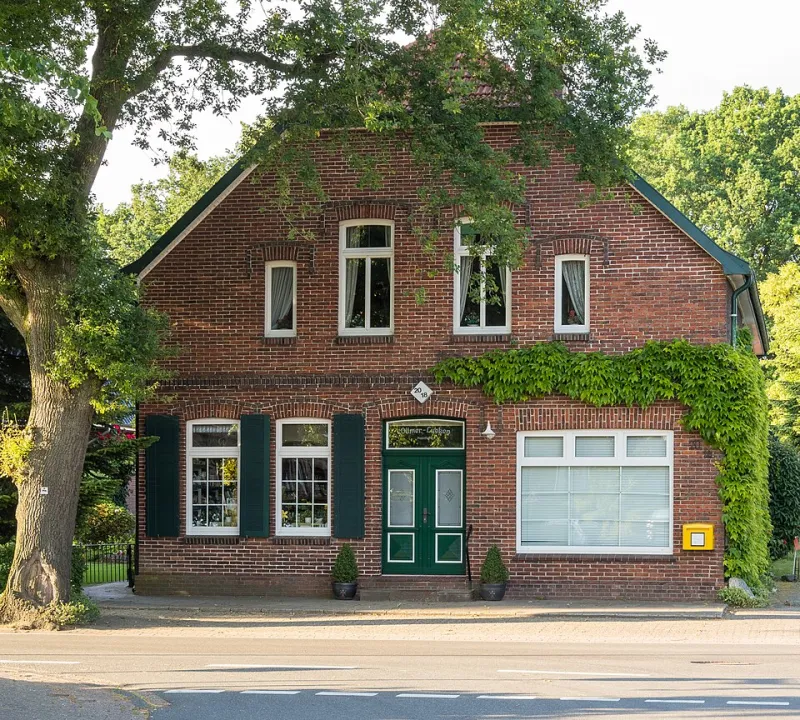
Photo: Dietmar Rabich, CC BY-SA 4.0, via Wikimedia Commons
A quotation arrives from a firm with a handsome address in a city centre, a landline, a registered office and a website that loads quickly. The buyer checks Companies House, finds the company in good standing, and places an order. Then someone tries to send a pallet.
The address turns out to be a mail-handling service on the fourth floor of a serviced building. There is no yard, no forklift, no goods-in door. The pallet is refused, or redirected at the buyer's cost, and a question that should have been asked at the start is asked at the worst possible moment: where do you actually work?
What a buyer is really checking
Due diligence on a small supplier is rarely a formal exercise. It is a series of small checks: the registered office on Companies House, the address on the VAT registration, the pin on a map, the landline answered by a person, the site visit offered before it is requested.
A virtual office passes some of these checks and fails others. It is entirely legitimate as a mail-handling and registered-office arrangement. It is not evidence of operational capacity, and it should not be presented as though it were. The gap between an address and a door is where trust quietly leaks away.
The postcode as a promise
Consider what a buyer is implicitly promised by an operational address. That goods can be delivered there and signed for. That a collection can be made. That a sample can be sent and returned. That an engineer, an auditor or a customer can attend. That people work there, and that the firm has a physical presence it can be held to.
None of these is guaranteed by a virtual address, and some are actively impossible. A pallet network will not deliver to a mailbox. A customer audit will want to see the process, not a meeting room. A bank opening an account for a new company will often ask what the business actually does and where, and a credit reference agency may treat a mail-forwarding address differently from trading premises.
What a real unit buys
A working unit is not a status symbol. It is a sales asset, and it earns its keep in unglamorous ways: deliveries accepted without a phone call, stock that can be inspected, a place to host a customer who wants to see the operation before signing, and a landline answered by someone who can walk to the shelf and check.
It also produces the kind of evidence a buyer cannot manufacture: a photograph of the yard, a signed delivery note, a site visit that takes twenty minutes and answers a dozen questions at once. For a small B2B firm, that evidence is worth more than a prestigious postcode.
When a virtual office is the right answer
It would be wrong to treat virtual addresses as a marker of dishonesty. For a consultant working at client sites, a sole trader who needs a registered office and a professional postcode, a start-up testing a market, or a firm opening a second location before committing to a lease, a virtual office is sensible and cost-effective. A serviced office with a real desk and a reception that accepts deliveries is a middle path worth considering.
The test is disclosure. A firm that says plainly that its registered office is a mail-handling address, and gives the address where goods are received and where staff can be met, is being straightforward. A firm that lets a buyer assume the opposite is storing up a problem.
How buyers can check without being rude
Ask three questions before the first order: where will goods be received and who signs for them; can we visit the site where the work is done; and what is the best number for the person who will handle our account. Then check the answers against Companies House and the VAT number. Inconsistencies are a prompt to ask, not an accusation — addresses change, and small firms use agents for perfectly good reasons.
We are not neutral on this point. Our own address is a unit on a trading estate, with a goods-in door and a yard, and we have argued before that the estate is where much of Britain's real business happens. But the principle is wider than our own premises. A buyer is entitled to know whether the address on the letterhead is where the work is done or where the post is opened. The answer should come from the supplier, early and without being asked twice.
The cost of getting it wrong
For the buyer, the cost is a redirected pallet, a delayed installation, and a nagging doubt that surfaces at every subsequent order. For the supplier, it is worse: a credibility gap that no amount of polished branding closes, and a customer who quietly shortlists them out next time. Reputation in small B2B markets travels by word of mouth, and the story of the pallet that was refused travels faster than any brochure.