Due Diligence in Reverse: The Five Questions Every Supplier Should Be Ready to Answer
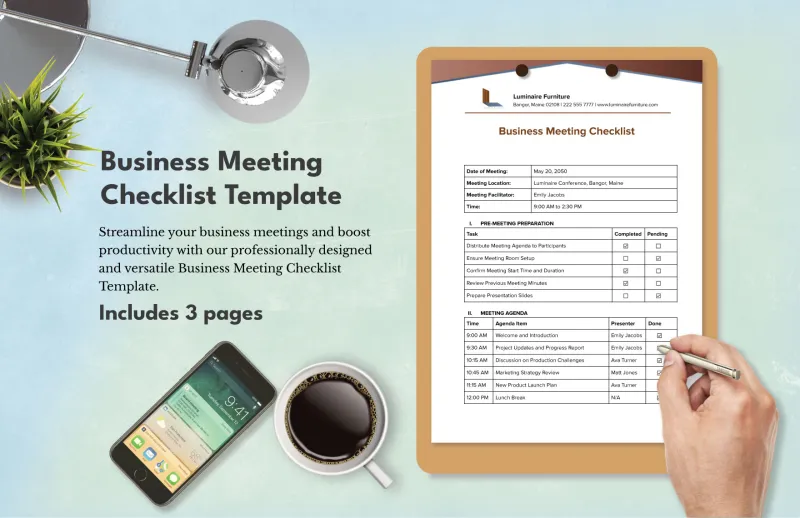
Photo: business meeting checklist review desk UK office professional, via images.template.net
Anyone who has run a procurement process knows the questions. Financial stability, references, insurance, contingency planning, communication protocols. They are asked of suppliers routinely and, on the whole, reasonably.
What interests us is how rarely the questions are turned around. If a supplier is worth hiring, it should be able to pass its own vetting. So we did something slightly uncomfortable: we applied the standard due diligence checklist to Hings Ltd and answered honestly. The results are below — including one or two answers that are less polished than a brochure would allow.
1. Can You Demonstrate Financial Stability?
The buyer's question: are you going to be trading in twelve months?
Our honest answer: we are a small, privately run company with modest overheads and no debt-fuelled expansion to service. That is a strength in stability terms, though it also means we do not have the balance sheet of a national firm. We are happy to provide accounts and references, and we would encourage any prospective client to ask. A supplier who bristles at that request is telling you something.
2. What Happens When Something Goes Wrong?
The buyer's question: what is your contingency plan?
Our honest answer: the plan is candour, quickly. We do not have a redundant warehouse or a second production line, and pretending otherwise would be misleading. What we do have is early warning — we flag delays at the first sign of trouble, with a revised timeline attached. In our experience, clients can plan around almost any problem except the one they learn about on the due date.
3. Who Is Actually Responsible for Our Account?
The buyer's question: give us a named contact.
Our honest answer: the name you deal with is the name responsible. There is no handover between sales and operations because, at our size, there is no meaningful separation. This is partly a deliberate choice and partly an honest admission of scale. Either way, accountability is unambiguous.
4. Are Your Commitments Realistic?
The buyer's question: can you deliver what you quote, when you quote it?
Our honest answer: our lead times are built with margins, which occasionally makes us look uncompetitive on paper. We would rather lose a quotation than win it on a promise we cannot keep. Buyers should be wary of any supplier whose turnaround times never vary, whatever the workload — that is usually optimism, not capacity.
5. Will You Tell Us When We Are Wrong?
The buyer's question, asked less often than it should be: will you push back?
Our honest answer: yes, and we consider it part of the service. If a specification will not achieve what a client needs, or a timeline is unworkable, we say so — politely, but plainly. The most valuable thing a trading partner offers is not agreement; it is judgement.
The Point of the Exercise
We are not suggesting every supplier should publish its own interrogation. But we do believe the best trading relationships are built between parties who have both thought honestly about their own weaknesses.
Buyers should keep asking their questions. Suppliers should be ready to answer them about themselves first.