The End Unit Nobody Enquired About: What Our Trading Estate Taught Us About Location
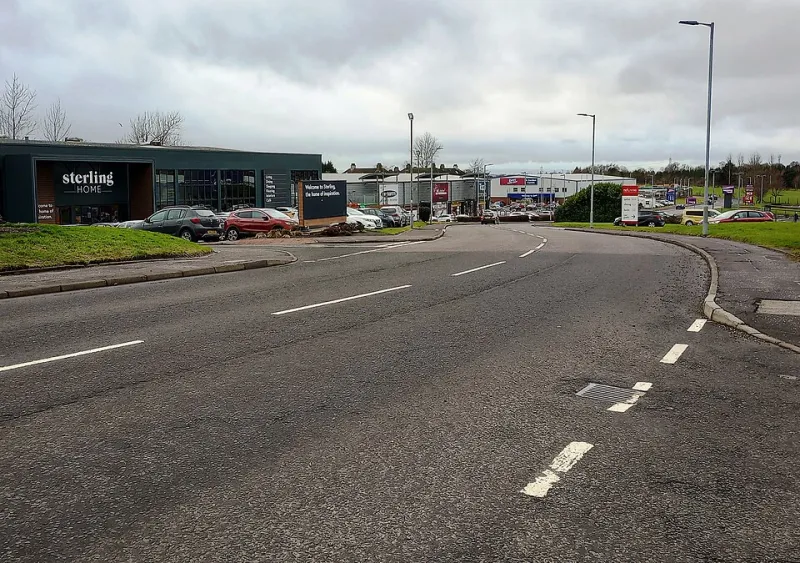
Photo: Jim Smillie , CC BY-SA 2.0, via Wikimedia Commons
The Unit Every Other Tenant Walked Past
When we outgrew our first premises, we did what most small firms do: we drew up a shortlist of the smartest business parks within an hour's drive. Rendered facades, visitor parking, a gym on site. The rents reflected all of it, and we very nearly signed for a unit that would have cost us nearly double what we pay now.
What stopped us wasn't cleverness. It was a delivery. We watched a haulier try to reverse an articulated lorry into one of those prestigious units on a wet Tuesday afternoon, blocking the access road for twenty minutes while three cars queued behind him. That single image did more for our decision-making than any spreadsheet.
Prestige Is a Cost Centre
There is a persistent belief in British business that your address does half your selling. Perhaps it once did. But our clients — distributors, manufacturers, public sector buyers — rarely visit. They ring, they email, they order. When they do visit, they want to see the goods, check the loading arrangements and leave. Nobody has ever judged us on our reception furniture.
What they do judge us on is whether the order arrives on time and intact. And that is where the unfashionable end of the trading estate earns its keep.
What We Actually Bought
Our unit is the last one on the row, tucked behind the estate's original 1980s signage. It had stood empty for eight months. The letting agent's tone suggested we were doing him a favour. We saw it differently:
- A level loading bay with direct vehicle access — no shared yard, no queuing, no neighbours' pallets blocking the door
- Rent at roughly half what the business park units were asking, which funded a second forklift and a proper racking system
- Landlord who answers the phone — a small estate means a small landlord, and repairs get done in days, not quarters
- Room to grow — we've since taken the unit next door on a straightforward deal
The Neighbourhood Effect
There's another factor that doesn't appear in any property listing: who your neighbours are. On our estate, the firm two doors down fabricates steel. When we needed a rush job on a bracket for an urgent order, it was sorted the same afternoon, on a handshake, with a cup of tea. On a polished business park, that conversation would have been a procurement enquiry with a three-week lead time.
Trading estates are full of small firms doing genuinely useful things — engineering, haulage, storage, trade counters. That density of practical capability is worth more to a B2B operation than any landscaped roundabout.
Bad Locations Are Usually Misread Ones
We're not arguing that location doesn't matter. It matters enormously — just not in the way estate agents and design magazines suggest. The right questions aren't about image. They are: How far is the motorway? Can an HGV actually turn in? What does the unit cost per pallet stored, not per square foot? Who else is here?
The unit nobody wanted was mispriced by the market because it was being measured against the wrong yardstick. For a firm like ours — a trading and services business that lives or dies on logistics and reliability — it was, frankly, the best-located building in the county.
A Wider Lesson
There's a broader point here about how small firms evaluate anything: premises, suppliers, even staff. The option that looks least impressive on paper is often the one that's simply been judged by criteria irrelevant to your actual operation. We nearly paid a premium for a view of a lake and a coffee machine in reception.
Instead, we got a loading bay that works, neighbours who help, and a landlord who picks up. If that's what a 'bad' location looks like, we'll take two.