The Tooling Clause: Who Holds the Patterns When the Order Ends
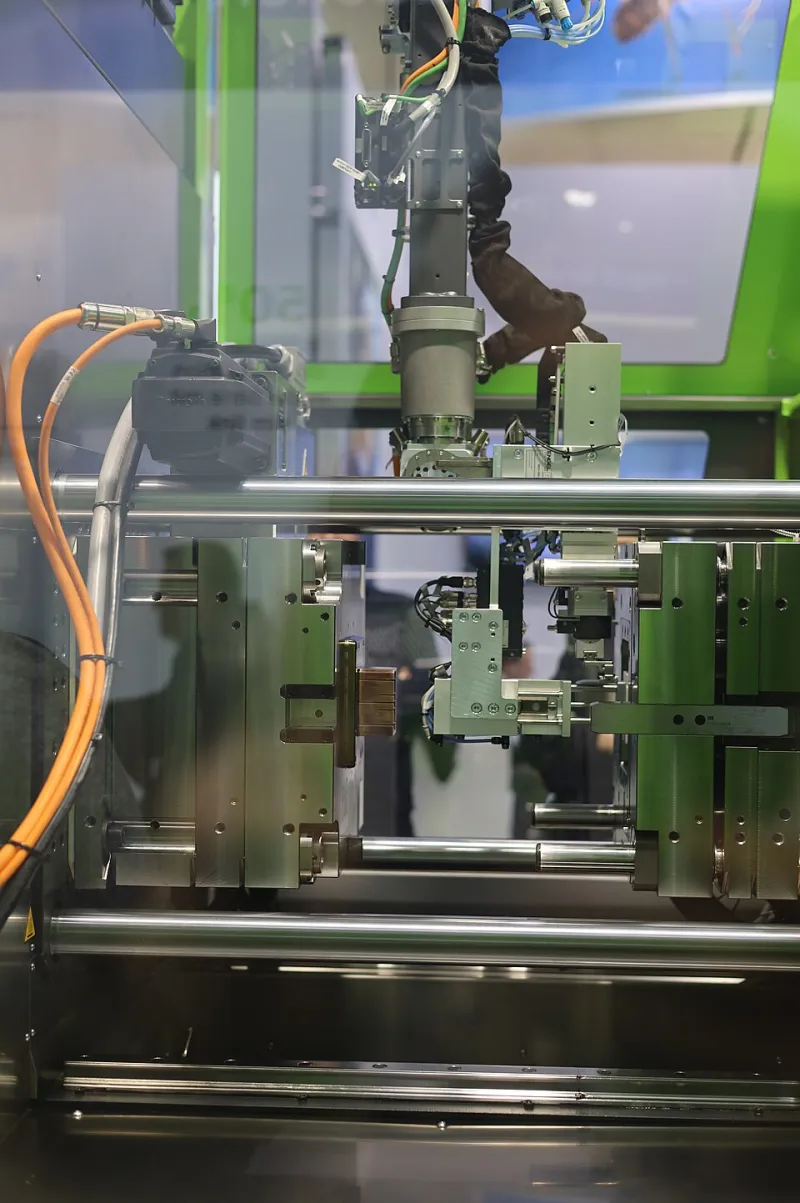
Photo: Bricetofly, CC0, via Wikimedia Commons
Custom orders rarely fail because the first delivery is wrong. They fail years later, when the buyer wants to move, scale or stop, and discovers that the mould, pattern or jig on which the product depends belongs to somebody else. At Hings Ltd we have seen enough tooling arrangements to know that the invoice is a poor guide to ownership. The deposit may have paid for the tool, but the paperwork may not say so.
The commercial point is simple. A custom product is not only a specification and a price. It is also the physical and digital kit that makes the product repeatable: injection moulds, press tools, patterns, jigs, fixtures, print blocks, cutting dies, artwork, CAD files, CNC programmes and setting sheets. Those items can cost more than a first order and can take longer to replace than a supplier. They deserve their own clause.
Why tooling matters more than the first delivery
A buyer often treats tooling as part of the supplier's overhead. The supplier quotes a unit price, perhaps with a one-off tooling charge, and the buyer pays a deposit. Everyone focuses on the first batch. The question of who owns the tool is left until a price dispute, a change of supplier or a company failure makes it urgent.
That is the wrong sequence. Tooling is a capital asset. If the buyer has funded it, the buyer should normally own it. If the supplier has funded it, the buyer should know what rights the supplier is granting. If both have contributed, the arrangement should say what happens on exit. Ambiguity is not neutral. It tends to favour the party holding the tool.
The three questions to settle before the deposit
First, ownership. Who owns the tooling, and when does title pass? Is it on payment of the tooling charge, on completion of the tool, or only on payment of the final invoice? A buyer should avoid a clause that leaves title with the supplier until every invoice in the relationship has been paid. That creates a lien over the buyer's own product.
Second, storage. Where will the tooling be kept, who pays for storage, who insures it, and can the buyer inspect it? A tool sitting in a supplier's rack is not the same as a tool the buyer can access. Storage terms should cover damage, deterioration and access.
Third, handover. What exactly will be handed over, in what format, at what cost and within what time? A mould without its setting sheets may be useless. A pattern without the artwork file may require remaking. Handover should include drawings, programmes, jigs and any sub-tooling held by third parties.
Plain-English clauses that do the work
The following are illustrative, not legal advice. They show the shape of a workable clause.
- Ownership: 'The Buyer shall own the Tooling from the date of payment of the Tooling Charge, notwithstanding that the Tooling remains in the possession of the Supplier.'
- Storage: 'The Supplier shall store the Tooling in a dry, secure location, insure it for replacement value, and permit the Buyer or its representative to inspect it on reasonable notice.'
- Handover: 'On termination, the Supplier shall hand over the Tooling and all associated drawings, programmes and setting sheets within ten business days, subject only to payment of outstanding storage charges properly incurred.'
- Third parties: 'The Supplier shall disclose any sub-tooling or tooling held by a third party and shall procure its release to the Buyer on the same terms.'
- Records: 'The Supplier shall maintain a tooling register identifying each item, its location, its condition and the date of last use.'
A buyer does not need a forty-page agreement for a simple custom order. It does need a schedule that lists each tool, its value and its owner. The schedule should be signed or referenced in the contract. A photograph and a serial number are useful. So is a short statement of what the tool is for and which product it makes.
Exit scenarios worth rehearsing
Consider a supplier insolvency. If the buyer owns the tool and the contract says so, the buyer has a much stronger position. If ownership is unclear, the tool may be treated as part of the supplier's assets. The buyer may still recover it, but only after argument and cost.
Consider a price dispute. A supplier holding a buyer-owned tool may be entitled to charge for storage, but should not be entitled to keep the tool as security for a general trading debt. The clause should distinguish between storage charges properly incurred and unrelated invoices.
Consider a volume shortfall. Some suppliers amortise tooling across an expected volume. If the buyer orders less, the supplier may seek a contribution. That is a commercial point, but it should be agreed in advance. Otherwise the tooling becomes a lever in a later negotiation.
Consider end of product life. The buyer may want the tool returned, scrapped or transferred to another supplier. The contract should say who decides, who pays and what records are provided. A tool that is simply left in a corner is a liability, not an asset.
A practical checklist before signing
- List every physical and digital item needed to make the product.
- State who owns each item and when title passes.
- Record where each item is stored and who insures it.
- Agree inspection rights and notice periods.
- Set a handover timetable and a format for drawings and programmes.
- Identify any third-party tooling and require disclosure.
- Confirm what happens on insolvency, dispute and end of product life.
- Keep a signed tooling schedule with the contract, not in a separate email chain.
At Hings Ltd we treat tooling as part of the deal, not as an afterthought. A buyer who settles the question before paying a deposit is not being suspicious. It is simply good commercial housekeeping. The invoice may last thirty days. The mould may last ten years. It is worth deciding who owns it while everyone is still on speaking terms.