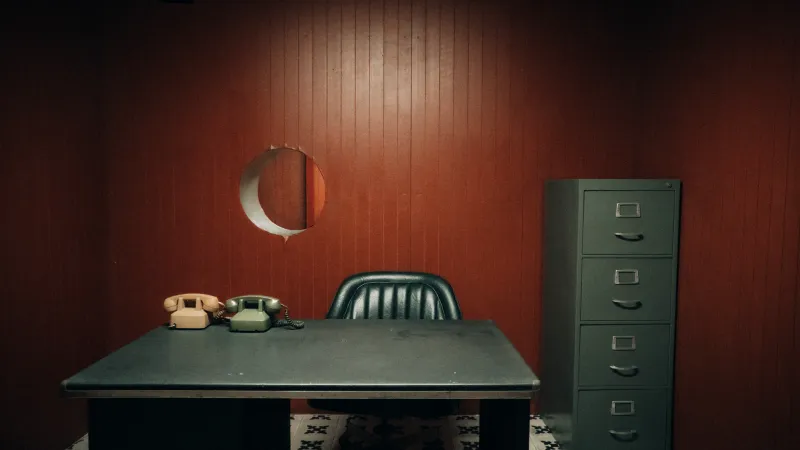
The Cabinet in the Corner: What Our Filing System Knows That Our Software Doesn't

Photo: Hasslaebetch, CC BY-SA 4.0, via Wikimedia Commons
Every small firm in Britain has one. It sits in the corner of the office, usually beige, occasionally dented, with a drawer that sticks unless you lift the handle slightly before pulling. Ours is a four-drawer steel monster that came with the unit when we took the lease in 2004. Nobody has ever trained anybody on it. Nobody has ever had to.
And yet, every couple of years, a well-dressed consultant visits, looks at the cabinet with mild distaste, and explains that we need to 'digitise our operations'. Sometimes they bring a slide deck. Once, memorably, somebody flew up from London to tell us about a platform.
We are not against software. We run plenty of it, and some of it earns its keep. But twenty years of trading has taught us to be honest about the difference between systems that do work and systems that perform work for an audience.
What the Cabinet Actually Holds
Open our second drawer and you will find delivery notes going back to 2011, held together with the same bulldog clip since the day they arrived. There is a folder marked 'M. — DO NOT LOSE' that contains a handwritten agreement from a supplier who has since changed ownership twice. There are certificates, insurance schedules, and a 2016 dispute file that settled out of court, annotated in biro with the words 'check the small print on pallet weights'.
That annotation has saved us money. Not theoretically — actually. Twice.
No software we have been shown replicates this. Not because the technology can't, but because the value isn't in the storage. It's in the friction. Writing 'check the small print on pallet weights' on a document takes ten seconds and a considered thought. Adding a note field in a CRM takes ten seconds too, but nobody does it, because nobody has to slow down enough to think.
Where Software Genuinely Wins
We should be fair to the consultants. Some things are categorically better digital, and we moved them years ago without regret:
- Invoicing and payment chasing. Automated reminders have recovered money we would once have been too polite to chase.
- Stock levels across sites. A spreadsheet shared between the office and the warehouse replaced a whiteboard that was always a week behind.
- Customer records. When our long-serving office manager retired, we were deeply grateful her contacts weren't in a paper address book.
The pattern is consistent: software excels when the information is structured, repeated, and needed by more than one person. It struggles when the information is contextual, one-off, or depends on knowing why it matters.
The Checklist We Now Apply
Before we move anything out of the cabinet and onto a platform, we ask four questions:
- Will someone other than the person who filed it need this? If yes, digitise. If it's really for the person who wrote it, paper is fine.
- Does this need to be found in a hurry? Insurance documents, compliance records, anything an auditor might ask for at short notice — all digital, all backed up.
- Does the software add a step or remove one? Be honest. Many systems add three steps to capture data nobody reads.
- Who maintains it when the enthusiast leaves? Every small firm has had a system that only Dave understood. When Dave left, so did the system.
If a proposed platform fails two or more of these, it stays in the cabinet. We have never regretted that rule. We have regretted the exceptions.
The Cost of Expensive Theatre
The most expensive software mistake we witnessed wasn't ours, but it was instructive. A neighbouring firm on the estate bought a full ERP implementation — the kind with a launch event and branded mugs. Eighteen months later, the warehouse still ran off a laminated list, and the ERP was used, in the words of their foreman, 'for printing things out so we can read them'.
That is expensive theatre: software purchased to look modern rather than to solve a problem. It happens when the buyer is answering a question about image rather than a question about work. Small firms, with no IT department and no slack in the week, cannot afford it.
A Defence of Scruffiness
There is a school of thought that says scruffy systems are a risk — that a bus factor of one, a sticking drawer, and a biro annotation represent negligence. We take the point, and we mitigate it: critical documents are scanned, important agreements live with the accountant as well as the cabinet, and the 'M.' folder has a duplicate.
But we would argue the opposite risk is rarely priced in. A firm that digitises everything often loses the thinking that the paper process forced. The delivery note that gets signed, filed, and occasionally flicked through is a document that gets re-read. The PDF that disappears into a drive nobody opens is not.
The cabinet in the corner knows things our CRM doesn't, because it was built by people who had to understand what they were filing. Until software can make people think as they record, some of the most important knowledge in a small firm will stay exactly where it is — in a steel drawer, under a bulldog clip, with a note in biro that will one day save somebody a great deal of money.