Three Phone Calls and a Solution: The Case for Short Supply Chains

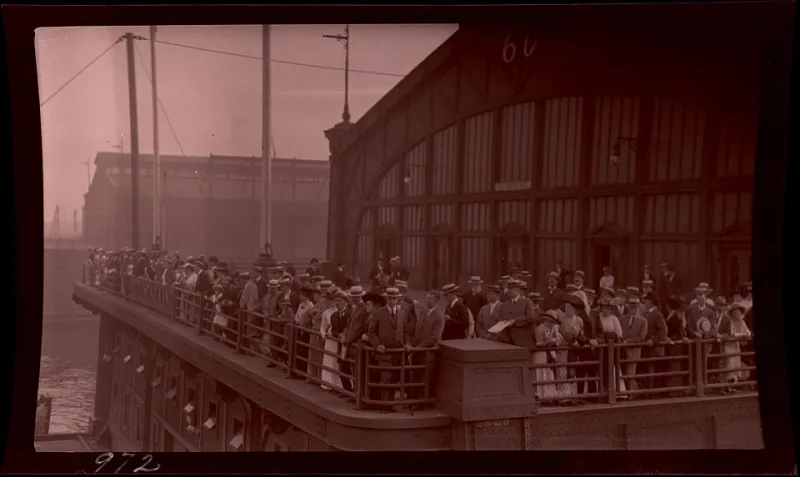
Photo: JoachimKohler-HB, CC BY-SA 4.0, via Wikimedia Commons
There is a moment familiar to anyone who has spent years in trade: the phone call that arrives at 7:40 on a Monday morning to say the lorry hasn't turned up. What happens in the next four hours tells you almost everything about the supplier you've chosen.
At Hings Ltd, we have sat on both sides of that call over the years — as the firm chasing a missing consignment, and as the firm being chased. What we have learned, and what we believe procurement teams systematically undervalue, is that the speed of recovery from a problem bears almost no relation to the size of the company. If anything, it runs in the opposite direction.
The Arithmetic of Decision Chains
Consider what happens when a shipment is missed. In a large contractor, the account manager must log the issue, escalate to a logistics coordinator, who consults an operations manager, who may need sign-off from a regional director before rebooking transport or sourcing an alternative. Each step is reasonable. Each step is documented. Together, they can consume a week.
In a firm of our size, the same problem is typically resolved before lunch. The person who takes the call knows the warehouse, knows the haulier, and knows the client. They can ring the depot, re-route a pallet, and confirm the revised delivery — all without a single internal memo. We have re-booked EU-bound freight within hours of a ferry cancellation for precisely this reason.
This is not a boast about work ethic. It is structural arithmetic. A decision chain with two links will always outpace one with six, regardless of how talented the people in it are.
When the Rules Change Overnight
The second scenario we encounter regularly is regulatory. Post-Brexit, UK importers have lived through a rolling series of changes to customs paperwork, rules of origin, and health certification requirements. When a new requirement landed with little notice — as several did — large contractors needed compliance teams to review guidance, draft internal procedures, and cascade instructions across departments.
A small firm reads the guidance over a strong cup of tea, rings its freight forwarder, adjusts its documentation templates, and carries on. The adaptation might be rough around the edges, but it happens the same week. For the buyer waiting on goods, rough and prompt beats polished and late every time.
What Buyers Should Actually Test
None of this means scale is a weakness in all respects. Large suppliers bring capacity, redundancy, and contractual weight that matter on major programmes. But if resilience under disruption is your priority, we would suggest testing for it directly rather than inferring it from turnover figures:
- Ask for a war story. Any supplier worth engaging can describe a genuine crisis and how they resolved it. Listen for how many people were involved and how long it took.
- Find out who answers the phone at 7am. If the answer is a ticketing system, that is your recovery speed.
- Weigh the escalation path. Ask, hypothetically, what happens if a delivery fails. Count the steps in the answer.
- Value proximity of authority. The ability of the person you speak to, to actually decide something, is worth more than any service-level agreement.
A Fair Word of Caution
Small firms are not immune to their own failure modes. Short decision chains depend on the individuals in them, and a two-man operation can become a single point of failure if one of the two falls ill. The best small suppliers mitigate this with clear documentation, trusted partners, and honest communication about capacity — and buyers should check for those habits just as carefully.
But on the central question — who recovers faster when something goes wrong — the evidence from two decades of trading points one way. Big organisations plan well and respond slowly. Small ones plan adequately and respond by teatime. For many orders, that trade is worth making.